Hillingdon council garden waste rules for Yiewsley gardeners
If you garden in Yiewsley, the rules around garden waste can be a little more fiddly than they first appear. One minute you're cutting back a hedge or clearing a pile of leaves; the next you're wondering what Hillingdon council will actually collect, what needs separating, and what to do with the awkward stuff like soil, branches, or a mixed load after a big tidy-up. This guide on Hillingdon council garden waste rules for Yiewsley gardeners is here to make that simpler. No waffle, no guesswork - just a clear, practical walkthrough of how to handle garden waste properly and avoid the usual headaches.
We'll look at what the rules mean in everyday terms, how to stay compliant, when council collection makes sense, and when a bigger clearance job may be better handled another way. There's also a checklist, a comparison table, and a few real-world examples from the sort of jobs local gardeners deal with all the time.
- Why the rules matter in Yiewsley
- How garden waste handling typically works
- Benefits of sorting it properly
- Who these rules affect
- Step-by-step guidance
- Expert tips for smoother garden waste management
- Common mistakes to avoid
- Tools, resources and recommendations
- Law, compliance and best practice
- Options and comparison
- Real-world example
- Practical checklist
- Conclusion
- Frequently asked questions
Why Hillingdon council garden waste rules for Yiewsley gardeners Matters
Garden waste looks harmless enough. Grass cuttings, leaves, hedge trimmings, and a few small branches - easy, right? Well, not always. Once you start mixing in weeds, soil, pots, rubble, treated timber, or bulky branches, a simple pile becomes a disposal problem. That's why understanding the local rules matters. It helps you avoid putting the wrong material out for collection, prevents missed collections, and reduces the chance of having to re-sort a messy heap on a damp Sunday morning. Been there, frankly.
For Yiewsley gardeners, the practical issue is not just compliance. It's time. If you know what belongs in a garden waste stream and what does not, you can plan pruning, mowing, and clearance jobs more sensibly. That's especially useful after seasonal work in spring and autumn, when gardens in this part of west London can go from tidy to surprisingly bulky in a week.
It also matters because mixed waste creates friction. The council collection system, local recycling routes, and private clearance options all work best when the waste is separated properly. If you get it wrong, you may face delays, extra handling, or the simple annoyance of having to move everything twice. And let's face it, nobody wants to drag wet branches back through the side gate because the load wasn't accepted.
How Hillingdon council garden waste rules for Yiewsley gardeners Works
At a practical level, the rules come down to separating garden waste from general household waste and other non-organic material. The exact collection arrangements can change over time, so it's always sensible to check the current council guidance before you book work or prepare a skip-like load. But the principle stays the same: organic material from the garden is treated differently from plastic, soil, broken fencing, and other mixed debris.
In ordinary day-to-day terms, garden waste usually includes things such as:
- grass cuttings
- leaves and small twigs
- prunings from shrubs and climbers
- hedge trimmings
- small amounts of cut flowers and plant material
Things that often cause trouble include:
- soil, turf, and large amounts of mud
- stones, rubble, and broken pots
- treated wood, fencing, or decking offcuts
- plastic ties, compost bags, and mixed packaging
- kitchen food waste mixed into garden bags
That last one catches people out more than you'd think. After a long garden clear-out, a single bag can end up containing a bit of everything. It looks efficient at the time, but it usually creates a sorting problem later. If you're already doing a bigger tidy-up, using a dedicated garden clearance service can sometimes be a cleaner and easier route than trying to DIY every bag and bundle yourself.
Another thing to keep in mind is volume. A few bags after mowing are one thing. A full border clearance, hedge cut, and tree prunings are another. In those cases, the method you choose should match the amount and type of waste. That's where a bit of planning saves a lot of effort.
What usually happens in practice
Most local gardeners follow a simple pattern: collect green waste separately, keep it loose or in the right containers, remove non-organic items, and decide whether the waste is going to council collection, composting, or a one-off clearance. If you're maintaining a garden regularly, this becomes easier quickly. Weekly mowing, periodic hedge trimming, and light pruning are much less stressful when the waste is handled as you go.
If your garden care is more continuous, pairing waste habits with a proper garden maintenance routine is often the smartest move. Small, regular jobs create less waste pressure than large seasonal catch-ups. It's boring advice, maybe, but it works.
Key Benefits and Practical Advantages
Following the rules properly brings more than just peace of mind. There are a few very real, everyday advantages.
- Fewer rejected collections. If materials are separated properly, collections are more likely to go smoothly.
- Less clutter in the garden. Clear waste handling keeps patios, paths, and sheds usable while you work.
- Better recycling and composting outcomes. Organic materials are easier to process when they are not contaminated.
- Lower risk of fly-tipping-style mess. When waste piles build up, they attract trouble. Simple as that.
- More efficient jobs. Whether you are mowing, pruning, or landscaping, tidy waste handling saves time.
There's also a quieter benefit: a neater workflow. In a real garden, not a magazine spread, waste piles can get in the way of the next task. A pile of cut branches by the fence can slow down hedge work. Bagged grass can make a driveway slippery. A sensible system clears the way for the actual gardening. That matters if you're trying to get through a job efficiently before the weather turns or the daylight disappears at 4:30 pm in winter. Yes, it really feels that early.
For bigger refresh projects, the same logic applies to layout and access. If your garden is also being redesigned, there may be a point where simple waste collection is not enough, and a broader plan is needed. In those cases, combining disposal planning with landscape gardening or full landscaping work can help you avoid a stop-start mess.
Who This Is For and When It Makes Sense
This topic is relevant to a wide range of people in Yiewsley, not just keen gardeners. If you fall into any of these groups, it's worth understanding the rules properly.
- Homeowners doing regular mowing, pruning, and border tidy-ups
- Landlords preparing a property between tenancies
- Older residents who need help with heavier green waste
- Busy families who do gardening in short bursts at weekends
- People with larger plots where hedge cuttings and branches build up fast
- Anyone doing seasonal clearance after storms, overgrowth, or a long neglected patch
It makes the most sense to focus on the rules when the waste is likely to exceed a couple of bags, when there are multiple waste types in one job, or when you are planning work that will leave a lot of cut material behind. If you only have a little lawn clippings after a quick mow, the process is straightforward. If you've just taken a hedge back by a metre or cleared out a forgotten border full of ivy and roots, you need a clearer plan.
That's why many people combine routine garden jobs with service support. For example, if you are tackling hedges, a dedicated hedge trimming service will often create a very different waste profile from mowing alone. Likewise, trees add another layer of complexity, especially where larger limbs or woody material are involved. For that, tree lopping and removal needs more careful handling than a simple green waste bag.
Step-by-Step Guidance
If you want the short version: separate, sort, store, and schedule. But here's the practical version in a little more detail.
- Work out what kind of waste you have. Split garden waste from everything else before you start loading bags. Green waste, soil, timber, plastic, and rubble are not the same thing, even if they all came from the same corner of the garden.
- Remove contaminants early. Pick out plant ties, labels, broken pots, and packaging as you go. It's much easier now than after the pile has been sat there for two days in the rain.
- Keep organic waste separate. Grass, leaves, hedge cuttings, and plant trimmings can usually be grouped together. Keep them loose or in approved containers where relevant.
- Handle bulky items separately. Branches, trunks, root balls, and large clumps of turf often need a different approach from standard green waste.
- Decide whether council collection is enough. If the amount is modest, council collection may be fine. If you have a heavy or mixed load, a more comprehensive clearance solution may be more practical.
- Store waste safely while waiting. Keep bags dry where possible, avoid blocking paths, and do not leave sharp sticks or heavy piles where someone could trip.
- Use the right support for the job. A routine garden tidy may only need mowing and bagging. Bigger jobs may benefit from a broader package such as lawn mowing or full garden clearance.
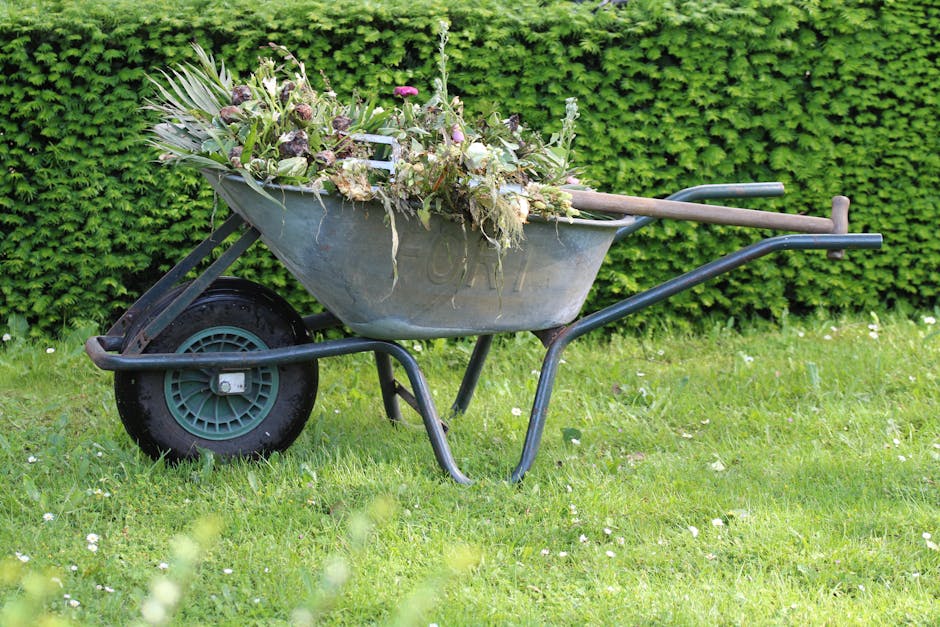
A sensible habit is to tackle waste as you create it. A wheelbarrow half full is easier to manage than four overstuffed sacks and a mysterious branch pile leaning against the fence like it pays rent.
Expert Tips for Better Results
Here are a few practical tips that make garden waste management easier, especially in a place like Yiewsley where back access, narrow paths, and damp weather can all get in the way.
- Cut and clear in phases. If you're pruning a hedge, clear each section as you finish it. You'll keep the garden usable and reduce slipping hazards.
- Use breathable sacks for green waste where suitable. Very wet material gets heavy fast. If you've ever tried lifting a soaked bag of grass, you know exactly what I mean.
- Keep compostable and non-compostable waste apart from the start. It saves time and reduces contamination.
- Plan around the weather. A dry morning can make waste handling much easier than a drizzly afternoon when everything sticks together.
- Think about access. If the only route out is through the house or a narrow side passage, smaller loads are usually better.
- Don't ignore recurring waste. A fortnightly mow and trim may only create a little waste each time, but over a month it adds up. Small habits prevent big pile-ups.
One local reality worth mentioning: gardens around Yiewsley often have compact spaces, shared access points, or awkward turns around extensions and outbuildings. That means neat stacking and good timing matter. Truth be told, waste handling can be more about logistics than gardening skill.
If your garden work includes long-term shaping or planting changes, you may find it useful to look at a wider service plan. The broader services overview can help you think about how clearance, maintenance, and improvement work fit together.
Common Mistakes to Avoid
Most problems with garden waste are predictable. The good news is they're also avoidable.
- Mixing soil with green waste. This is one of the most common reasons a load becomes awkward. Soil behaves differently from plant material and is often handled separately.
- Including plastics and ties in green bags. A few bits of plastic might seem harmless, but they can spoil a whole load.
- Overfilling bags. Wet hedge cuttings are heavy. Overpacked sacks split, and then you're sweeping the driveway while muttering to yourself.
- Leaving waste to sit too long. It becomes wetter, heavier, smellier, and harder to move.
- Assuming every garden material is accepted the same way. Logs, roots, turf, and branches can all have different handling expectations.
- Forgetting that maintenance creates waste too. A "small" trim can still produce more volume than expected, especially with mature shrubs.
Another mistake is underestimating the effect of one-off jobs. The garden may look fine for months, then a storm, a hedge cut, and a border tidy-up land in the same week. Suddenly you're dealing with far more material than you planned. That is exactly when many people realise a one-off garden maintenance arrangement would have saved them time.
Tools, Resources and Recommendations
You don't need a shed full of specialist kit to handle garden waste well. But a few basics make life much easier.
| Tool or resource | Why it helps | Best for |
|---|---|---|
| Heavy-duty garden bags | Help separate and carry green waste safely | Grass, leaves, hedge clippings |
| Wheelbarrow | Reduces repeated lifting and keeps paths clearer | Moving cuttings and branches |
| Secateurs and loppers | Let you cut waste into manageable pieces | Pruning and hedge work |
| Tarpaulin or sheet | Makes collecting piles quicker on soil or lawn | Clearance jobs and seasonal tidy-ups |
| Dedicated sorting space | Prevents waste types getting mixed together | Any larger job |
In our experience, the most useful "tool" is actually habit. A simple routine - cut, sort, stack, remove - works better than any clever gadget. Still, if your garden jobs regularly produce more waste than your bins can comfortably handle, it can be worth getting help from a professional team that understands disposal and access issues. The page on pricing and quotes is a sensible starting point if you're comparing options.
If sustainability matters to you, keep an eye on how waste is being separated and reused. A practical, low-friction approach to greener garden management is often the best one. The site's recycling and sustainability information is worth a look if you want to think a bit more carefully about your garden waste habits.
Law, Compliance, Standards, or Best Practice
Garden waste handling is not something most people think of as "compliance", but there is a genuine best-practice side to it. In the UK, householders are generally expected to separate waste sensibly, avoid fly-tipping, and make sure any waste handed over is handled responsibly. For a local gardener, the main point is simple: do not mix waste in a way that creates problems for collection or disposal.
The safest approach is to treat council instructions as the baseline and then work to a higher standard in your own garden. That means:
- keeping organic waste clean and separate
- avoiding contamination by plastics, soil, and construction debris
- using safe lifting and storage practices
- not leaving waste in a way that blocks pavements, access routes, or shared areas
Where garden work includes heavier or riskier tasks - such as tree sections, large hedge reductions, or hard access clearance - it is reasonable to think in terms of safety as well as disposal. That's where trustworthy providers should have clear processes around handling, insurance, and risk reduction. If you want a sense of how a professional service approaches this, the site's insurance and safety information and health and safety policy show the kind of standards that matter.
There's also a straightforward human lesson here: if a job feels too big to sort safely on your own, that is probably because it is too big to sort safely on your own. No medal for wrestling a hedge into submission with a small bin liner and optimism.
Options, Methods, or Comparison Table
When it comes to garden waste in Yiewsley, the best option depends on amount, type, and how quickly you want the garden back under control. Here's a simple comparison.
| Method | Best for | Pros | Watch-outs |
|---|---|---|---|
| Council garden waste collection | Routine green waste in manageable volumes | Convenient, tidy, familiar | Needs correct sorting and suitable preparation |
| Home composting | Leaves, grass cuttings, soft trimmings | Low waste, eco-friendly, useful for the garden | Not suitable for all materials; needs space and patience |
| DIY trip or private clearance | Bigger clear-outs, mixed loads, bulky prunings | Handles more volume; more flexible | Requires planning, lifting, and correct segregation |
| Professional garden service | Regular maintenance, hedge work, large tidy-ups | Efficient, less lifting, better for complex jobs | Costs more than doing nothing, obviously, but saves time |
For many Yiewsley households, the sweet spot is a mix: compost some waste, collect the easy green material, and use professional support for the larger or awkward jobs. That keeps things practical without turning every Saturday into a disposal project.
Case Study or Real-World Example
Here's a typical local scenario. A Yiewsley homeowner decides to sort the garden after a wet spell in late autumn. The lawn has grown unevenly, the laurel hedge has sent out long shoots, and a border that looked tame in July is now full of dead stems, leaves, and a few stubborn weeds.
At first, the plan seems simple: mow the lawn, trim the hedge, and bag everything up. But once work begins, the waste volume grows fast. The hedge cuttings are bulky, the grass is damp, and the border sweep includes both plant waste and a small amount of soil from an overenthusiastic weeding session. The first few bags are fine. Then the pile starts leaning, the wheelbarrow gets heavy, and access through the side gate becomes awkward.
What helps in that situation? A cleaner split of materials and a decision point. The grass and leaves can be kept separate from the woody hedge waste. The soil is set aside. Bigger branches are trimmed down before moving. And instead of trying to force everything into one disposal route, the homeowner chooses the more practical combination: routine waste management for the smaller material, and a broader clearance approach for the awkward bits.
The result is not dramatic. The garden just feels easier to use again. You can hear the gravel underfoot, see the path properly, and breathe a bit easier because the job is actually finished. That's the point, really.
Practical Checklist
Use this checklist before you put out garden waste or start a bigger clean-up.
- Have I separated green waste from soil, rubble, plastic, and wood?
- Are hedge trimmings, grass cuttings, and leaves kept together sensibly?
- Have I removed labels, ties, pots, and packaging?
- Are the bags or containers not overfilled?
- Is there a safe route for moving waste out of the garden?
- Do I know whether this is a routine collection job or a larger clearance job?
- Have I stored waste where it will not create a trip hazard or block access?
- Should I book help for hedge, tree, or full-garden work?
- Have I checked the current council guidance before relying on a collection method?
- Am I happy that the waste is being handled in a tidy, compliant way?
If you can tick most of those off, you are usually in good shape. If not, pause and sort the load properly first. It saves time in the long run.
Get a free quote today and see how much you can save.
Conclusion
For Yiewsley gardeners, understanding Hillingdon council garden waste rules is mostly about common sense done well: keep green waste separate, avoid contamination, plan for the size of the job, and choose the right disposal route for the material in front of you. Once you get that rhythm right, gardening gets simpler. Cleaner. Less irritating, too.
The best results usually come from a steady, realistic routine rather than one heroic clear-out followed by a mountain of bags. Small maintenance jobs, sensible sorting, and timely removal will almost always beat last-minute scrambling. And if you are dealing with something bigger than a standard tidy-up, it's perfectly reasonable to bring in support so the waste is handled properly from the start.
In the end, a well-kept garden should feel like a place to enjoy, not a place to wrestle with rubbish. Keep it practical, keep it neat, and the rest tends to follow.
Frequently Asked Questions
What counts as garden waste under Hillingdon council rules?
In simple terms, garden waste is the organic material that comes from normal garden work: grass cuttings, leaves, hedge trimmings, small branches, and plant prunings. Things like soil, rubble, plastic plant pots, fencing, and treated timber are usually handled separately.
Can I mix soil with garden waste bags?
Usually, no. Soil is heavy and behaves differently from green waste. Mixing it into bags makes collections harder and can cause problems with handling or acceptance. It is better to keep soil aside and deal with it separately.
Do hedge cuttings count as garden waste?
Yes, hedge trimmings are normally part of garden waste if they are clean and free from non-organic contamination. If the hedge job creates a large volume, it may be better to clear it in stages or arrange a larger removal solution.
What should I do with branches and woody cuttings?
Smaller woody cuttings may be included with green waste, but larger branches often need to be bundled, cut down, or removed separately. If you have a lot of woody material, it's worth checking the current collection expectations before you assume it will all go in one sack.
Can I put weeds and dead plants in with garden waste?
Usually yes, as long as they are not mixed with soil, plastic, or other contaminants. If weeds have gone to seed or are tangled with roots and mud, keep them separate and bag them carefully.
Is it better to compost garden waste at home?
For leaves, grass clippings, and soft trimmings, home composting can be a very sensible option. It reduces waste and gives you useful compost later on. It's not ideal for everything, though, especially woody material, thick stems, or diseased plant matter.
What if I have too much waste for the usual collection?
If the amount is more than a routine collection job, you may need to split the waste into different streams or arrange a broader clearance. In practice, large hedges, tree pruning, and full garden resets often create more volume than people first expect.
How often should I clear garden waste in Yiewsley?
That depends on how active your garden is. For some people, a weekly or fortnightly clear-up is enough. For others, especially during spring and autumn, waste builds up quickly and needs attention more often. Regular small clearances are usually easier than one huge tidy-up.
What are the most common mistakes people make?
The big ones are mixing soil into green waste, overfilling bags, leaving plastic ties in the load, and waiting too long to clear material from the garden. These mistakes are easy to make, especially during a rushed weekend job, but they can cause real inconvenience later.
When does it make sense to use a professional garden service?
It makes sense when the job is large, awkward, or time-sensitive. If you're dealing with hedge reductions, tree work, or a full garden reset, a professional team can handle the clearance more efficiently and help keep the waste organised. That is especially useful if access is tight or the waste is heavy.
How do I know whether my garden waste is compliant?
The safest approach is to keep organic green waste clean and separate, avoid mixing in other materials, and follow current local collection guidance. If you are unsure, treat the waste conservatively and separate anything doubtful rather than guessing. A neat split is nearly always better than a messy one.
Can garden waste be part of a bigger garden renovation?
Absolutely. In fact, waste planning is often one of the most overlooked parts of a garden project. If you are changing layout, replacing features, or doing a full refresh, plan the waste route before the work starts so the garden does not become blocked mid-project. That one small step saves a lot of hassle.
Where can I find more help for garden work in Yiewsley?
If you want help with the broader garden job, the most useful next step is to look at the relevant service pages, such as garden clearance, maintenance, mowing, hedge work, or tree work, depending on what you need. Getting the right help for the right task is usually the quickest way to keep the garden tidy and the waste under control.